Circular on Matters Concerning the Orderly Promotion of Direct Green Power Connection Development
(NDRC Energy Document No.〔2025〕650)
Development and Reform Commissions and Energy Bureaus of all provinces, autonomous regions, municipalities directly under the Central Government and the Xinjiang Production and Construction Corps; Beijing Municipal Commission of Urban Management; Tianjin Municipal Bureau of Industry and Information Technology, Liaoning Provincial Department of Industry and Information Technology, Shanghai Municipal Commission of Economy and Informatisation, Chongqing Municipal Commission of Economy and Informatisation, Gansu Provincial Department of Industry and Information Technology; all regional offices of the National Energy Administration; State Grid Corporation of China, China Southern Power Grid Company Limited; relevant central SOEs:
To implement the guiding principles of the Third Plenary Session of the 20th Central Committee of the Communist Party of China, and the decisions and arrangements of the Party Central Committee and the State Council on improving policies and measures for renewable energy consumption and regulation, to explore and innovate integrated development models for the production and consumption of renewable energy, facilitate local on-site consumption of renewable energy, and better meet enterprises’ demand for green power consumption, this Circular is formulated in accordance with the *Energy Law of the People’s Republic of China* and other relevant laws and regulations.
I. General Requirements
(1) Scope of Application
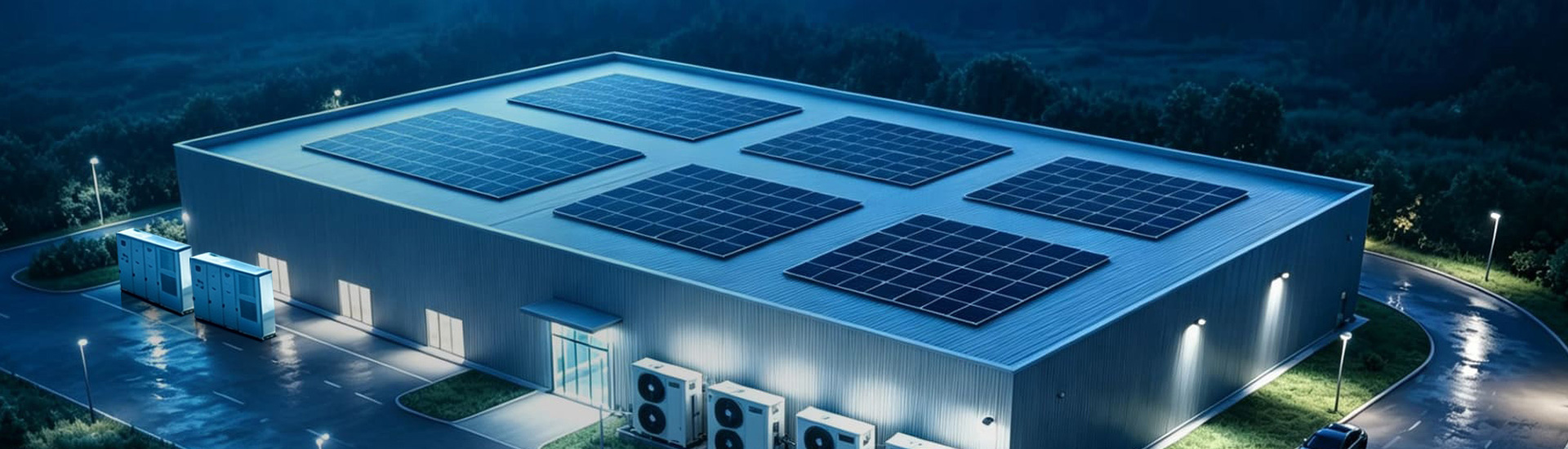
Direct green power connection, as defined herein, refers to a model whereby renewable energy such as wind power, solar power and biomass power generation is not connected directly to the public power grid. Instead, green electricity is supplied to a single power consumer via a dedicated direct connection line, enabling clear physical traceability of supplied electricity. A direct connection line means a dedicated power line linking the power source directly to the power consumer. Projects are classified as grid-connected or off-grid according to whether the load is connected to the public grid.
Grid-connected projects are integrated as a single unit into the public grid, forming distinct physical and responsibility boundaries with the public grid. The power source shall be connected on the consumer side at the property demarcation point between the consumer and the public grid.Where the connected power source consists of distributed photovoltaic systems, implementation shall follow the *Measures for the Administration of the Development and Construction of Distributed Photovoltaic Power Generation* and other relevant policies. Detailed provisions for supplying green electricity directly to multiple consumers through direct connection lines shall be stipulated separately by the National Development and Reform Commission and the National Energy Administration.
(2) Development Objectives
Direct green power connection projects are designed to satisfy enterprises’ green power requirements and raise the level of local on-site renewable energy consumption. They shall be constructed and operated under the principles of safety priority, environmental compatibility, equal rights and obligations, and source-load matching, with fair and reasonable assumption of safety, economic and social responsibilities.
II. Strengthening Planning guidance
(3) Regulating project construction
New loads may be matched with newly-built renewable energy projects. For existing loads, direct green power connection may be carried out on the condition that the existing coal-fired and gas-fired self-owned power plants have fully settled the renewable energy development fund. Clean energy substitution is realised by reducing the output of self-owned power plants. Export-oriented enterprises with rigid carbon reduction requirements may explore direct green power connection for existing loads using nearby renewable energy resources.
Support is available for renewable energy projects that have not commenced grid connection works, or cannot be connected to the grid due to renewable energy consumption constraints, to adopt direct green power connection after completing relevant alteration formalities.
(4) Enhancing integrated planning
Provincial energy authorities shall strengthen overall planning for direct green power connection projects to ensure the orderly development of this model. The installed capacity of wind and solar power for such projects shall be incorporated into the renewable energy development plan formulated by the provincial energy authority. Load capacity shall be backed by valid supporting evidence. Direct connection lines and connection systems shall, by voltage level, be incorporated into provincial or urban power and territorial spatial planning, and filed in accordance with the *Measures for the Administration of Verification and Filing of Enterprise Investment Projects*.
Direct connection lines shall minimise line crossings. Where crossings are unavoidable, adequate safety measures shall be put in place.
Each project shall adopt an integrated scheme covering power sources, loads, direct connection lines and grid interconnection systems. A dedicated section shall assess system risks, power supply safety and power quality, with specific technical mitigation measures proposed.
The connection voltage level shall not exceed 220 kV (330 kV). Where connection at 220 kV (330 kV) is genuinely necessary, the provincial energy authority, together with the regional office of the National Energy Administration, shall organise grid companies and project owners to carry out a special safety risk assessment of the power system to safeguard secure and stable grid operation. Projects shall be constructed and commissioned simultaneously in accordance with the integrated scheme.
(5) Encouraging model innovation
In principle, the load side shall act as the responsible principal party for direct green power connection projects. All types of market entities (excluding grid enterprises), including private enterprises, may invest in such projects.
The power source of a project may be invested in by the load owner, a power generation enterprise, or a joint venture established by both parties. The dedicated direct connection line shall in principle be invested in jointly by the load and power source entities.
Where the power source and load belong to different investors, multi-year power purchase agreements or energy management contracts shall be signed, covering matters such as power facility construction, property division, operation and maintenance, dispatch, settlement arrangements and liability for breach of contract. Renewable power generation projects under this model are exempt from electricity business licensing unless otherwise specified.
(6) Ensuring source-load matching
For grid-connected projects, the type and installed capacity of renewable energy sources shall be scientifically determined under the principle of “sourcing according to load”.
In regions with continuous operation of spot markets, the model shall prioritise self-consumption with surplus power fed into the grid as a supplement. In regions where spot markets are not operated continuously, reverse power feed into the public grid is prohibited.
For the project as a whole, the annual self-consumed renewable electricity shall account for no less than 60% of total available generated power and no less than 30% of total electricity consumption. The self-consumption ratio shall be increased progressively, to no less than 35% by 2030.
The upper limit of electricity exported to the grid as a share of total available generation shall be determined by each provincial energy authority according to local conditions, generally not exceeding 20%. Local authorities may set renewable energy utilisation targets rationally, based on project plans including self-consumption and export ratios, source-load matching and regulation capacity.
III. Strengthening operational management
(7) Reinforcing safety management
Direct green power connection projects shall strictly implement all safety production measures to ensure safe and stable operation. Risk control, hazard inspection and rectification shall be conducted promptly to identify and eliminate equipment faults and safety risks within the project, improving reliability continuously.
(8) Grid connection arrangements
Projects shall be fitted with secondary systems such as relay protection, stability control equipment and communication devices in line with standards. Grid-interfacing performance of all internal facilities shall comply with relevant standards to avoid endangering grid security and stability.
Projects shall complete acceptance inspection in due course and submit acceptance reports to the provincial energy authority and the regional office of the National Energy Administration. Grid enterprises shall provide grid connection services to eligible projects on a fair and non-discriminatory basis.
(9) Dispatch and operational management
Direct green power connection projects shall achieve coordinated optimisation of internal resources. The entire grid-connected project and its internal power sources shall be subject to the management of the corresponding dispatch authority according to connection voltage level and capacity. They shall be connected to the new-type power load management system or power dispatch automation system according to the type of services provided to the system.
Except for emergencies threatening the safe and stable operation of the public grid, dispatch authorities shall issue dispatch schedules in accordance with the generation and consumption curves arranged by the project itself.
Internal resources of the project shall be observable, measurable, adjustable and controllable. Relevant data shall be submitted to power dispatch authorities in compliance with the *Grid Operation Code*.
All business systems of the project shall strictly comply with the *Regulations on the Security Protection of Power Monitoring Systems*. Cybersecurity facilities such as network security monitoring and isolation devices shall be installed, filed with the relevant dispatch authorities as required, and subject to technical supervision by dispatch bodies.
(10) Clarifying responsibility boundaries
Grid-connected direct green power connection projects and the public grid form clear safety responsibility boundaries at the property demarcation point. Each side shall implement power safety risk control within its respective boundary.
The project shall comprehensively consider internal source-load characteristics, balancing capacity, economic returns and exchange power with the public grid, independently declare its grid-connected capacity reasonably, and negotiate with the grid enterprise on power supply obligations and charges beyond the declared capacity. Grid enterprises shall fulfil power supply obligations in accordance with the declared capacity and signed agreements.
The project shall regulate internal generation and load to ensure that the exchange power between the project and the public grid does not exceed the declared capacity. The project owner shall bear liability for power outages caused by its own factors.
(11) Encouraging improved system friendliness
Grid-connected direct green power connection projects shall improve flexibility and regulation capacity through rational deployment of energy storage and tapping flexible regulation potential of loads, to reduce regulation pressure on the power system as far as possible.
The project planning scheme shall specify the maximum load peak-valley difference ratio. The peak-valley difference ratio of exchange power between the project and the public grid shall not exceed the planned value in the scheme.
During periods of difficulty in renewable energy absorption, the project shall not feed power back into the public grid. Reactive power and power quality management shall be implemented in accordance with relevant regulatory requirements and technical standards.
IV. Trading and pricing mechanisms
(12) Market participation as an integrated entity
Grid-connected direct green power connection projects enjoy equal market status. They shall register under the *Basic Rules for Power Market Registration* and, in principle, participate in power market trading as a single integrated entity. Generation scheduling is arranged according to trading results, and settlement is based on the power exchanged with the public grid. Loads under the project shall not be subject to proxy power purchase by grid enterprises.
Where the power source and load belong to different investors, they may register separately and participate in power market trading in an aggregated form.
(13) Payment of relevant charges
Direct green power connection projects shall pay transmission and distribution charges, system operation charges, policy cross-subsidies, government funds and surcharges in accordance with provisions issued by the competent pricing and fiscal departments under the State Council. No region may waive or reduce such charges in breach of national regulations.
(14) Metering and settlement regulation
For grid-connected direct green power connection projects, the grid connection point serves as the reference point for metering and settlement, and settlement with the public grid is conducted on an integrated basis.
The project shall be equipped with separate metering arrangements. Bidirectional metering devices complying with relevant standards and approved by competent authorities shall be installed at boundaries for internal generation, auxiliary power consumption, self-consumption and energy storage. It is prohibited to consume electricity bypassing installed energy meters.
Where the power source and load are under separate ownership, electricity traded between them and electricity exported to the grid shall be handled in accordance with provisions on green certificates and green power trading.
V. Organisational safeguards
The National Development and Reform Commission and the National Energy Administration shall provide guidance on the direct green power connection model, assess outcomes in a timely manner to ensure steady progress, and carry out research on direct connection for other types of green power sources.
Regional offices of the National Energy Administration shall strengthen supervision, monitor project construction and policy implementation within their jurisdiction, and promote compliant construction and operation by all parties.
Provincial energy authorities shall refine local requirements such as the radius for local on-site consumption, export limits and exit mechanisms, based on local power supply-demand conditions and absorption capacity. They shall guide projects to assess demand rationally, preventing large deviations between actual operation and design schemes and underperformance in renewable energy consumption. They shall collect demand information for local direct green power connection projects, actively promote investment opportunities to private enterprises and support private capital participation in construction. They shall manage and monitor project operation, organise accredited third-party institutions to review project schemes, and fully solicit opinions from grid enterprises and regional offices of the National Energy Administration, to promote the orderly development of the direct green power connection model.
Grid enterprises and power market operators shall implement the requirements of this Circular and continuously improve technical support and service levels for project grid connection and participation in power market trading.
Source: National Energy Administration