China’s integrated‑energy industry is developing rapidly with growing market vitality and expanding market potential. Against the backdrop of digitalisation in the energy sector and the carbon peaking and carbon neutrality goals, Halidom takes clean energy as its orientation and keeps focusing on technological R&D and innovation within the new‑energy industry. It helps customers improve energy efficiency and cut energy‑consumption costs.
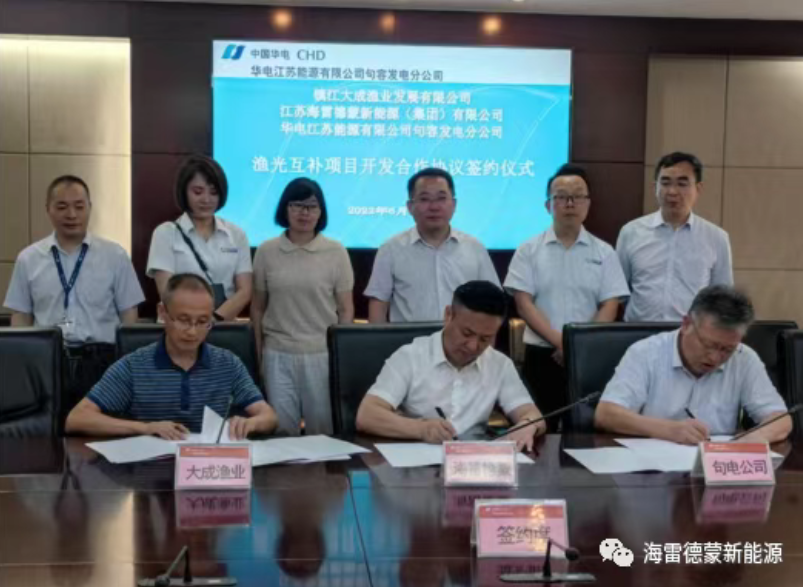
The Group has forged a strong partnership with Jurong Power Generation Branch of Huadian Jiangsu Energy Co., Ltd., carrying out co‑operation in clean‑energy fields including photovoltaic power generation, wind power generation, heat storage and energy storage.
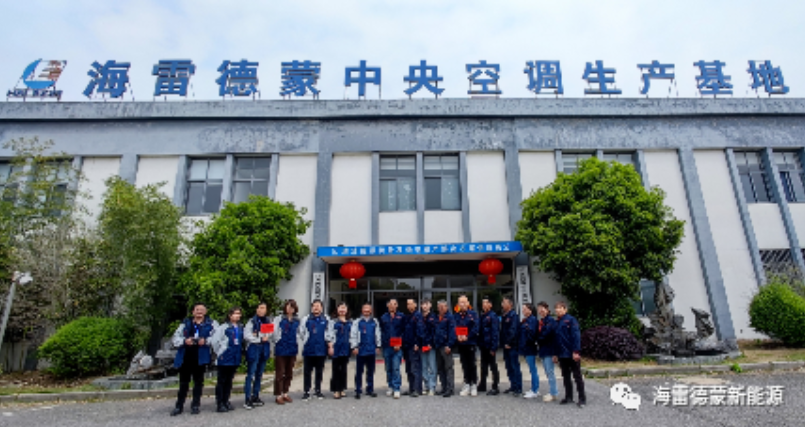
Jiangsu Halidom Group is a professional supplier of green‑energy solutions, integrating the R&D, manufacture and sales of HVAC and refrigeration products, supporting design and installation, as well as energy investment and operation services.
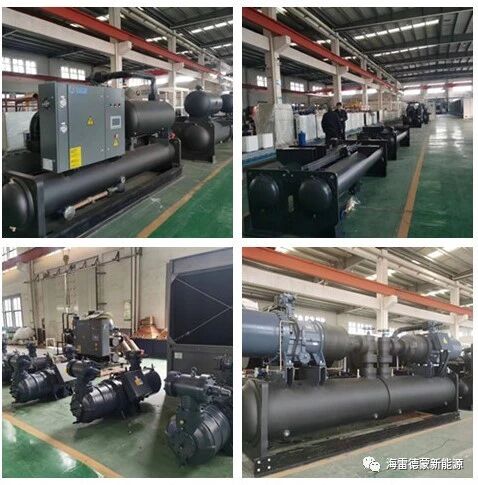
It is equipped with fully‑functional modern assembly production lines for central air‑conditioning systems and a full‑performance testing centre accredited by inspection authorities. It supports the manufacture and on‑line simulated operational performance testing of various specifications of energy towers, energy‑tower heat pump units, water‑source and ground‑source heat pump units, water‑cooled screw chiller units, air‑cooled heat pump units, high‑temperature hot‑water units and photovoltaic heat pump units.
Energy Tower Heat Pump SystemThe energy tower heat pump system is an innovative renewable‑energy technology and a type of new‑energy central air‑conditioning system. Its standout advantage lies in winter heating performance. Most conventional high‑power high‑efficiency units are cooling‑only, while the energy tower heat pump system delivers high‑efficiency cooling, heating and domestic hot water supply.
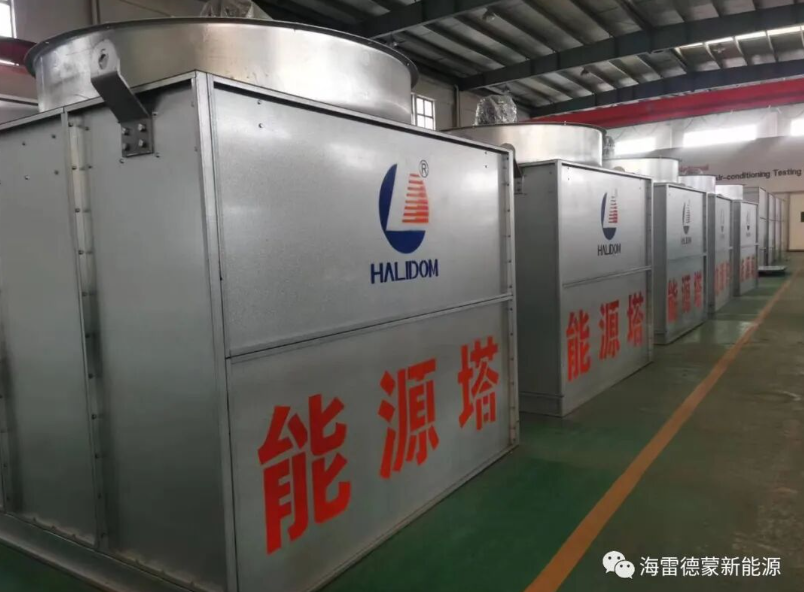
能源塔
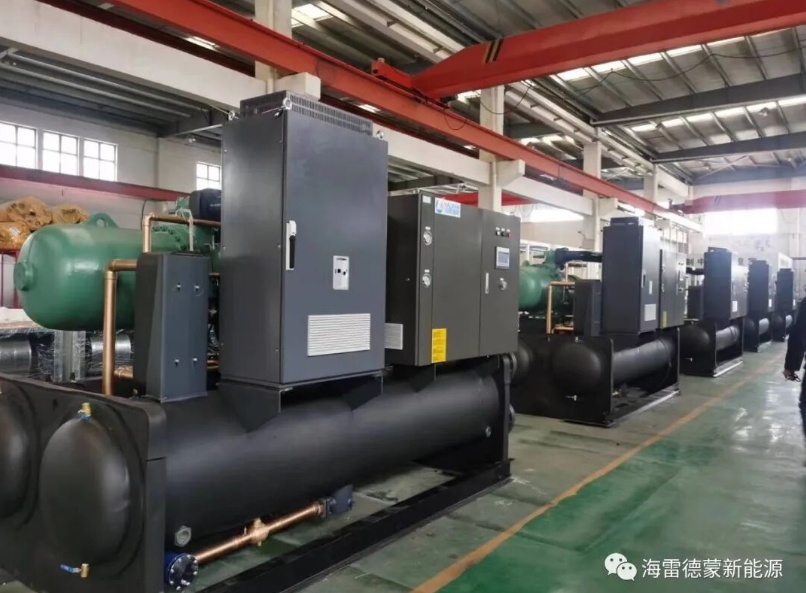
Energy Tower Heat Pump Unit
The energy tower heat pump system mainly consists of energy tower heat pump units, energy towers, secondary refrigerant, automatic solution‑concentration monitoring devices, solution concentration regeneration devices and solution dosing units.
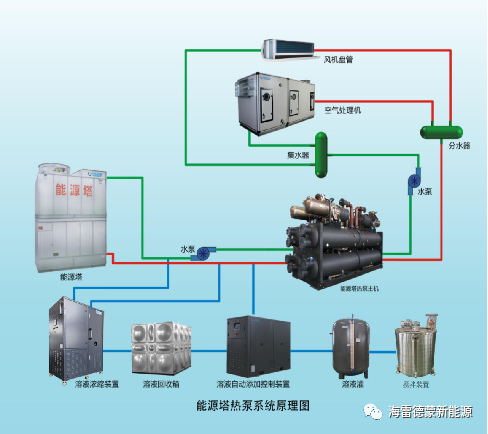
Sensible‑heat exchange: During heat rejection in summer and heat absorption in winter for the energy tower, sensible heat refers to the heat released or absorbed when the solution temperature rises or falls without any change in its phase. For example, a temperature rise from 20 °C to 30 °C represents sensible‑heat exchange.
Latent‑heat exchange: Latent heat is the heat absorbed or released when a substance changes its phase (gas condensing into liquid) with no variation in temperature. This process is known as latent‑heat exchange.
Advantages of the Energy Tower Heat Pump System: wide operating‑environment range, multi‑function single‑unit design, high energy efficiency, long service life of units, freedom from geological and site constraints, and high overall cost‑performance.
Photovoltaic‑Heat‑Pump Combined Heat and Power SystemThe photovoltaic‑heat‑pump system consists of heat pump units (including evaporators), PVT modules, hot‑water storage tanks, water pumps and pipe fittings.
Compared with conventional hot‑water systems, this system delivers multiple functions including power generation, cooling, space heating and hot‑water supply. PVT modules generate electricity to power the heat pump units. Thermal energy produced by the modules together with ambient air energy serve as the heat source for the heat pump units. Through unit operation, the hot‑water storage tank is continuously heated to supply end‑users for domestic purposes such as bathing as well as space heating. Meanwhile, surplus electricity can be consumed by household appliances or fed into the power grid.
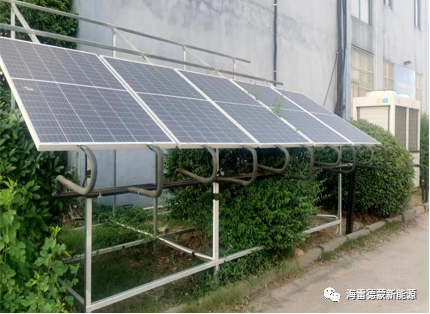
The PVT combined cooling, heating and power (CCHP) system integrates PV modules and thermal collector panels. It harnesses solar energy alongside natural energies such as wind energy, rain‑derived energy and ambient air energy, and converts these natural energies into electrical and thermal energy.
While generating electricity, the PVT modules transfer surface heat to the heat pump units. Power generated by the modules can drive the heat pump units, which in turn provide cooling, space heating and domestic hot‑water functions.
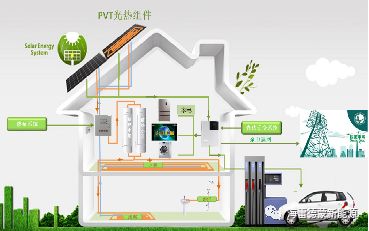
When solar irradiance is high, electricity generated by PVT modules is supplied preferentially to the heat pump units. Surplus power can be stored for subsequent power supply to the heat pump units and other electrical appliances, or fed into the municipal power grid to generate revenue.
When solar irradiance is low and power output from PVT modules cannot meet the demand of heat pump units, stabilised power supply can be realised via stored energy or municipal grid electricity.
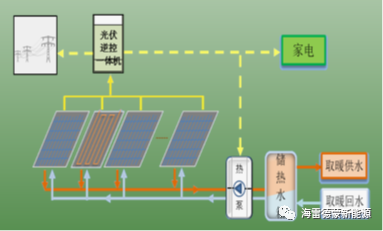
The system is also capable of electricity and thermal energy storage to meet round‑the‑clock power supply and air‑conditioning demands.
Advantages of Photovoltaic‑Heat‑Pump SystemEnergy‑Saving Performance
Overall efficiency is substantially improved. Power revenue rises by approximately 7‑10 %, heating efficiency increases by 50 %, and the comprehensive solar‑energy utilisation rate of PVT modules reaches 80 %, which extends the service life of PVT panels.
Diversified Functions
Customised services are available to satisfy varied client requirements, covering power generation, space heating, cooling and domestic hot‑water supply.
Efficient Space Utilisation4
With a well‑arranged layout, the integrated combined cooling, heating and power system delivers powerful performance within a compact footprint. It makes full use of roof‑space resources. Featuring compact and space‑saving design, it can realise simultaneous power generation, heating and heat supply on rooftops, exterior walls and balconies.
High Project Returns
One‑off investment brings multiple returns. The four core functions — power generation, space heating, cooling and domestic hot‑water supply — are achieved simultaneously, cutting equipment investment and generating continuous revenue from subsequent power production.
As a professional supplier of green‑energy solutions integrating the R&D, manufacture and sales of HVAC and refrigeration products, supporting design and installation, as well as energy investment and operation services, Halidom has delivered services for the following projects:
Hangzhou Zhongtian Headquarters Building (3‑Star Green Building)
Taihe Xicheng Capital Residential Community
Shandong International Commercial Port
Qianxinan Prefectural People’s Hospital, Guizhou
Linyi Hanyuan Garden Community, Shandong
Sports Centre of Huxi Campus, Chongqing University
The Second People’s Hospital of Changshun County
Hubei Fudi Sanyou Shopping Plaza
Xiya Chain Supermarket, Zhumadian, Henan
Zhenjiang Staff Culture and Sports Mansion
Jinhui Residential Community & Hengfu Residential Community, Cixian County, Hebei
Guizhou Provincial Disability Care Centre